
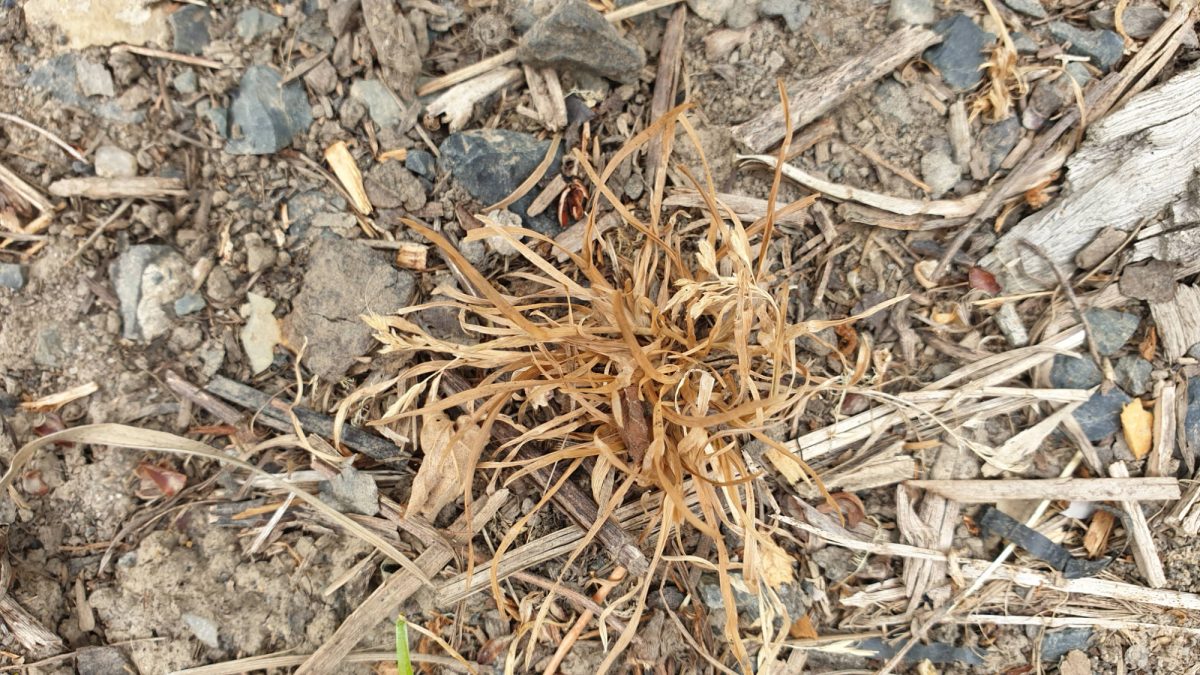
I haven’t used a conventional weed spray anywhere on my garden for over 20 years.
Which is great.
Except for the weeds…
And it got even worse in the last few years when I developed frozen shoulders, and could no longer pull weeds.
So I experimented with a ton of different approaches to keep my weeds under control, without the physical exertion.
I tried:
- “natural” weed sprays
- weed burners
- black landscape fabric
- tarps
and they all kind of worked, but had their downsides.
- The organic weed killer (Slasher) gave me (and everyone else) a headache
- The weed burner only worked on fresh weeds, and set anything nearby that was slightly dry on fire. Talk about dangerous!
- The fabric and tarps smothered the weeds, but started to break down and also looked pretty bad
So when I saw one of my favourite homesteading YouTubers using a natural homemade weed spray, I had to try her recipe.
And over the last couple of years, I’ve tested and adapted it to my situation.
And now my weeds are finally manageable, without having to exert myself too much.
Natural Weed Killer Spray Recipe
Use this homemade weed spray to stops weeds from taking over your garden.
Ingredients
- 1850ml white vinegar
- 250g salt (about half a cup)
- 50g liquid dishwashing detergent (about 47ml or 3 to 4 tablespoons)
- 10 drops cinnamon essential oil
- 10 drops clove essential oil
- 10 drops peppermint essential oil
- 20 drops citrus essential oil (e.g. lemon, orange, grapefuit, mandarin)
- 1 drop food colouring (any colour)
The good news is, it’s a very forgiving recipe, so if you get the amounts a bit wrong, it really doesn’t matter.
Method
- Strain the vinegar through a sieve to remove any gel growth
- Return most of the vinegar to a 2L bottle
- Add the salt, dishwashing liquid, essentials oils and food colour to the bottle
- Top off with vinegar
- Mix well (make sure your bottle doesn’t leak everywhere!)
Notes and tips
- I buy my vinegar in 2L bottles, whatever the cheapest one is that I can find at my local supermarket. They tend to be about 4% to 5% vinegar, which is strong enough for this application.
- I strain my vinegar because sometimes the bottles contain some of the mother, and that grows in the vinegar as a blobby mass. If this gel-like substance gets into my weed sprayer, it blocks the outlet and I have to spend ages washing it out and clearing it. So now I always strain my vinegar first.
- I just use the cheapest table salt that I can find at my local supermarket.
- The vinegar is what burns the leaves of the weeds, breaking down the cell walls and wilting the leaves, and lowering the pH (making it acidic), which inhibits photosynthesis and nutrient absorption.
- The salt dehydrates the weeds (dries them out), and salt also disrupts the balance in the nearby soil and roots.
- You can use any kind of liquid detergent, and if you want something super gentle for your garden and soil, try to avoid colours and scents.
- The soap is essential because it interacts with the waxy layer around the leaves, making it easier for the vinegar and salt mix to stick to the leaves and burn them.
- The essential oils are key ingredients for damaging the weeds, so the spray might not work as well if you leave them out.
- I don’t have any hard data on how much of a difference the essential oils make to the end result. They do add a bit to the cost, so feel free to experiment with how much you add.
- The food colouring is to make it clear that these bottles of “vinegar” are not for consumption. I tend to use green, because it’s a weird colour, but also because it was what I had on hand.
- Some plants are resistant to this spray, so you’ll just have to test it on everything and see what dies. The softer the leaves, the better it works. It doesn’t work on chard / silverbeet and parsley (partially burns). Ask me how I know!
Cost
Note: All figures are in Australian dollars.
- ~1.85 L of vinegar ~$1.70
- 250g salt ~ $0.45
- 50g liquid detergent ~$0.13
- 50 drops essential oil ~$1.30
Total cost for 2L ~$3.58
This is only slightly more expensive than the fancy concentrate, and it doesn’t give me a headache!
Usage
I put my homemade weed spray in a 2L pump spray bottle, and use it that way.
I wait for a fine, relatively still day, where rain is not likely for at least 24 hours. You don’t want the wind or the rain wasting all of your hard work.
If you can spray just before it gets really hot and dry, the plants don’t stand a chance!
I spray each weed thoroughly, making sure to wet as much of the leaf area as possible.
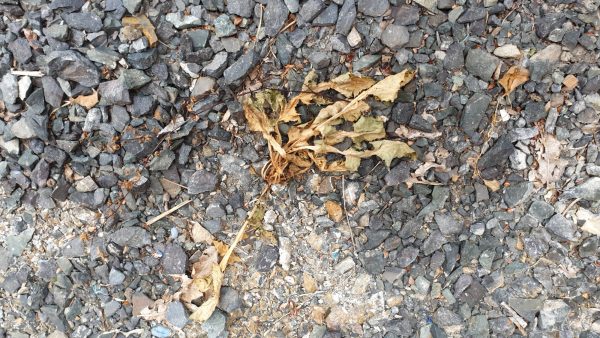
This weed killer only kills off the green tops of the weeds, and not the roots in the ground, so it will require multiple applications for some weeds to starve them of sunlight for long enough that they completely die.
If my weeds are a bit out of control (or it’s the height of spring), I aim to spray once a week.
Once my weeds are down to a bare minimum, I usually spray once every two to three weeks.
You can spray this natural weed killer on larger weeds and burn them off somewhat, but it tends to work best on smaller ones.
I also carefully avoid spray any of my beds where I want to actually grow things. Partly so I don’t kill my plants, but more importantly, because I don’t want the vinegar and salt to damage my soil.
I’m OK with the soil in my paths being a bit out of balance, because it discourages things from regrowing.
So now you have a natural, relatively low-cost way to keep your weeds under control.
I love this recipe and I hope you will too!
~ Nikki
